The Marian Record — Entry 04
Quick Reference
| Title | Our Lady of Lourdes — Notre-Dame de Lourdes |
| Type | Marian apparition, with an associated miraculous spring and a continuing record of medically inexplicable healings |
| Dates | 11 February to 16 July 1858 — eighteen apparitions |
| Location | The Grotto of Massabielle, Lourdes, Hautes-Pyrénées, southern France |
| Seer | Bernadette Soubirous (1844–1879), later Saint Bernadette, religious name Sister Marie-Bernarde |
| Status | Tier 1 — Approved. Formally recognized by the Bishop of Tarbes on 18 January 1862. Feast on 11 February, General Roman Calendar. World Day of the Sick. |
The Seer
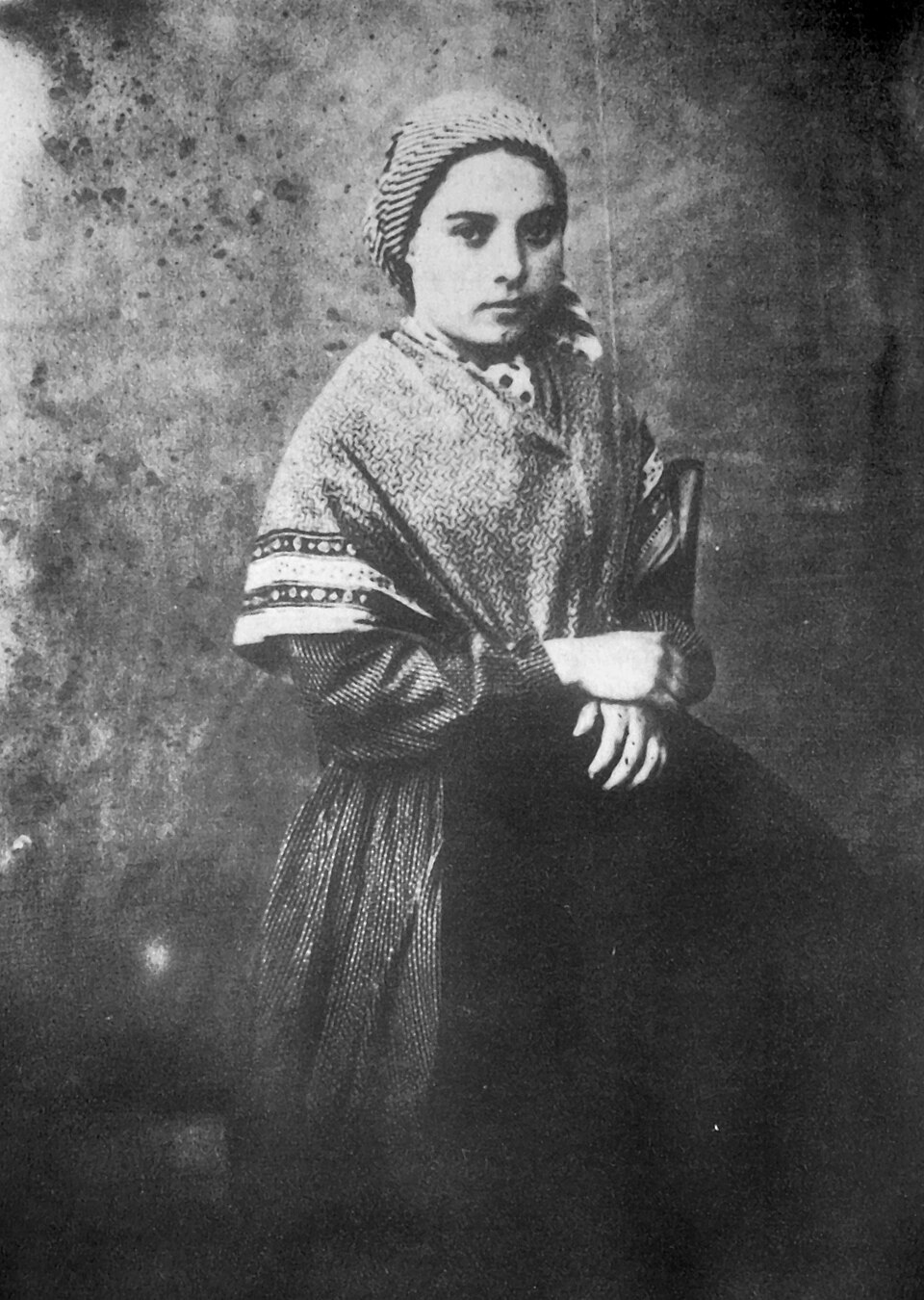
“The Blessed Virgin chose her only because she was the most ignorant.”
— Saint Bernadette Soubirous, on why she was chosen
That is the person to whom heaven entrusted a dogma.
The Eighteen Apparitions
| Apparition | Date | What Happened |
|---|---|---|
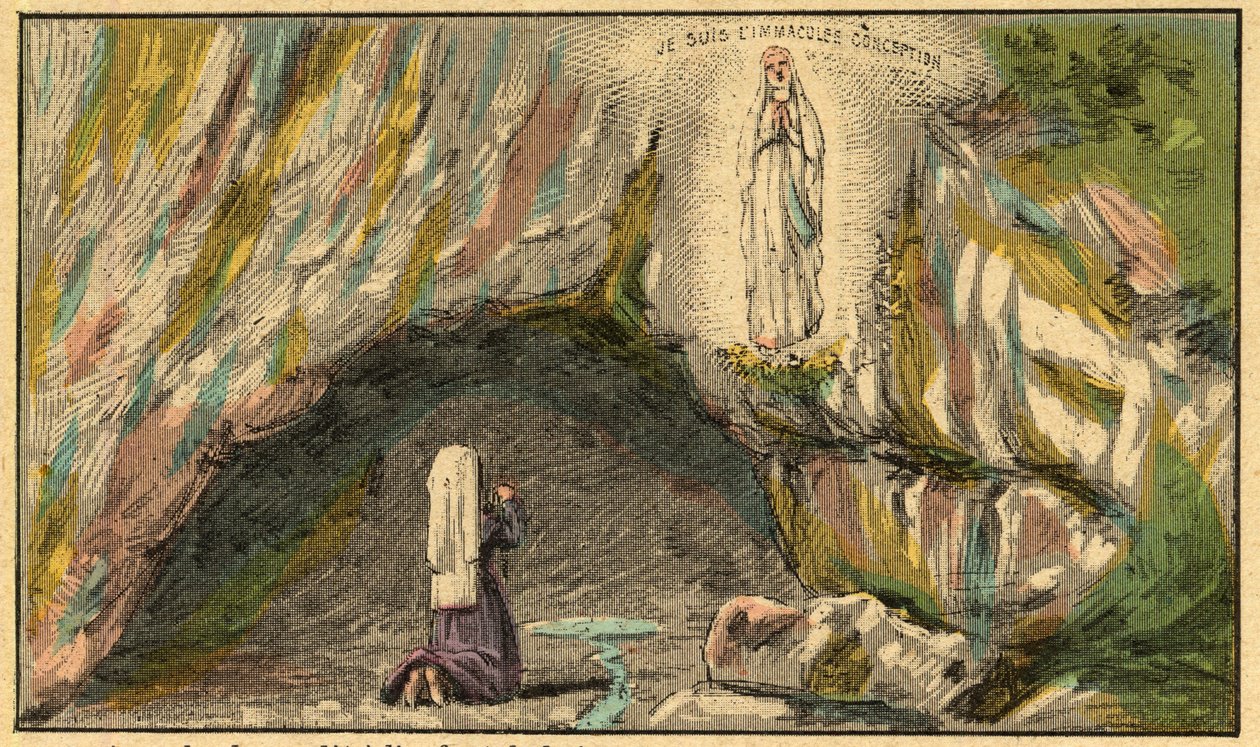
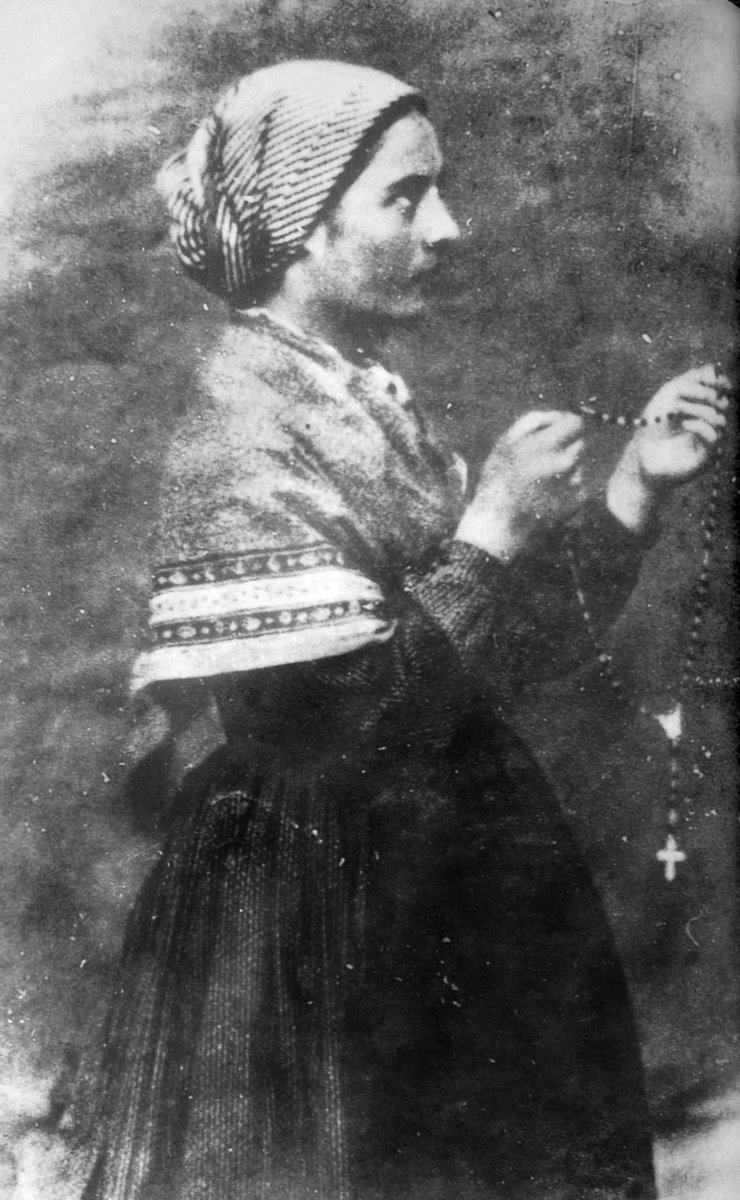
| 1st | 11 February | First sight of the Lady. No words. Bernadette prays the rosary with her. |
| 2nd | 14 February | The Lady returns. Still silent. Bernadette sprinkles holy water; the Lady smiles. |
| 3rd | 18 February | The Lady speaks for the first time. She does not promise happiness in this world, but in the next, and asks Bernadette to come to the grotto for fifteen days. |
| 4th–8th | 19–24 February | The daily visits draw growing crowds. The Lady asks for prayer and penance for sinners. |
| 9th | 25 February | The turning point. The Lady tells Bernadette to drink at the spring and wash there. There is no spring. Bernadette scratches at the mud, finds only a little dirty water, and on the fourth attempt is able to drink. She eats the bitter herbs growing there. To the watching crowd she says simply: it is for sinners. Within days a clear spring is flowing where she dug. |
| 10th–11th | 27–28 February | “Penance, penance, penance. Pray to God for sinners. Kiss the ground for the conversion of sinners.” |
| 12th–15th | 1–4 March | Crowds in the thousands. On 2 March the Lady says: “Go and tell the priests that people are to come here in procession, and that a chapel is to be built here.” Bernadette carries this to the parish priest, Father Peyramale, who demands one thing: the Lady’s name. |
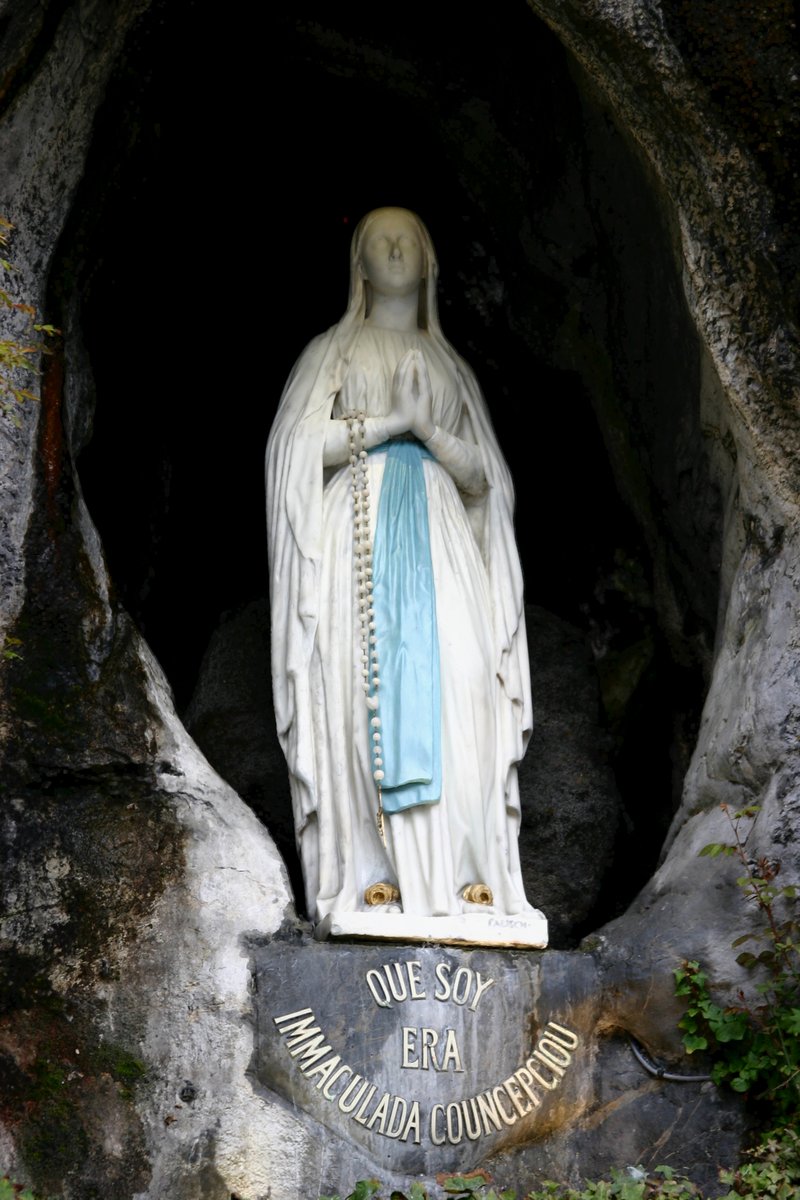
| 16th | 25 March | The Name. Bernadette asks, three times, for the Lady’s name. The Lady joins her hands, raises her eyes, and says in Occitan: Que soy era Immaculada Concepciou. “I am the Immaculate Conception.” Bernadette does not understand the words and runs the whole way to the priest repeating them so as not to forget. |
| 17th | 7 April | During the ecstasy, the flame of Bernadette’s candle plays around her fingers for a long time without burning her. A physician present, Dr. Dozous, observes it closely and testifies to it afterward. |
| 18th | 16 July | By now the civil authorities have fenced off the grotto. Bernadette sees the Lady one last time from across the river. She says the Lady never seemed more beautiful. |
The Message, and Where It Comes From in Scripture
Lourdes added no new doctrine. That is the first thing to say, and the Church says it first. Everything the Lady asked for is already in the Gospel.
Penance and prayer for sinners. The heart of the message is the same word that opens the public ministry of Jesus: repent (Mark 1:15). The call to pray and do penance for the conversion of sinners is the call to intercession that runs through all of Scripture.
The spring and the water. Bernadette is sent to a hidden spring that becomes a source of healing. The echoes are deliberate and biblical: the living water Christ promises (John 4 and John 7:38), and the healing pool at Bethesda (John 5). The Church is careful here. The water has been analyzed many times and is ordinary water. Bernadette herself reported being told that the water has no power without faith. Lourdes is not a magic well. It is a place where faith is rewarded.
The Sixteenth Apparition — 25 March 1858
“Que soy era Immaculada Concepciou.”
I am the Immaculate Conception. Spoken in Occitan, the language of the Pyrenees, to a girl who did not know the word and had to repeat it all the way to the priest’s house so as not to forget it.
The name: “I am the Immaculate Conception.” This is the doctrinal center of Lourdes, and the reason it carries such weight. Pope Pius IX had solemnly defined the Immaculate Conception as dogma on 8 December 1854, less than four years earlier. The dogma holds that Mary, from the first instant of her existence, by the grace of her Son won in advance, was preserved free of original sin. It rests on the angel’s greeting in Luke 1:28, on Mary as the New Eve, and on the enmity between the woman and the serpent in Genesis 3:15.
A fourteen-year-old who could not read, who did not know the word, and who had to repeat a phrase she did not understand, delivered to her parish priest the exact theological title the Church had just defined in Rome. The Church regards that as a confirmation from heaven of what it had declared on earth.
Associated Miracles and Signs
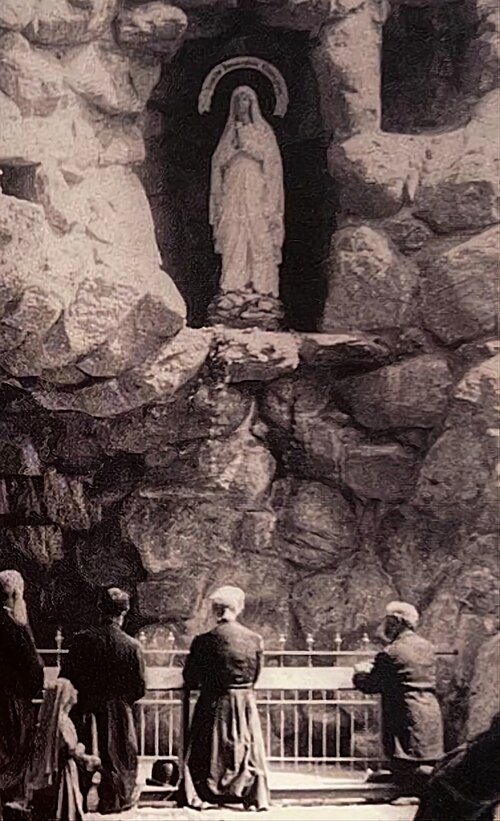
Seven thousand unexplained cures, and the Church has been willing to certify only about one percent of them. The discipline of this process is itself part of the witness.
The most studied recent case before 2025 was Sister Bernadette Moriau, the seventieth recognized cure, declared in 2018, healed of a long-standing neurological disability. More than eight in ten of the recognized cures have been of women.
Documented Fruits
The Sanctuary of Our Lady of Lourdes was built around the grotto exactly as the Lady asked: the Upper Basilica of the Immaculate Conception (1871), the Rosary Basilica (1899), and the underground Basilica of Saint Pius X (1958), which holds around twenty-five thousand people.
Pilgrimage of roughly five to six million people a year, of every denomination and of none, makes Lourdes one of the most visited shrines on earth. It is said to have more hotel capacity than any French city except Paris.
The World Day of the Sick, instituted by Pope John Paul II in 1992 and kept on 11 February, the feast of Our Lady of Lourdes, turns the shrine into the Church’s global focal point for the suffering and those who care for them.
Saint Bernadette herself. She avoided the fame, joined the Sisters of Charity of Nevers in 1866, took the name Sister Marie-Bernarde, and lived hidden and often ill until she died on 16 April 1879 at the age of thirty-five, praying, her last words a plea for Mary’s prayers for a poor sinner. She was beatified in 1925 and canonized on 8 December 1933.
Investigation History
The local crowds and the civil authorities reacted first. Police questioned Bernadette repeatedly, a magistrate threatened her, and for a time the prefect had the grotto fenced off. Through all of it her account never changed, a consistency that impressed even hostile examiners.
The Church moved slowly and deliberately. The Bishop of Tarbes, Bertrand-Sévère Laurence, opened a canonical commission and waited four years before ruling. On 18 January 1862 he declared that Mary had truly appeared to Bernadette and that the faithful were justified in believing it, authorized the cult, and called for the building of the church the Lady had requested. The feast spread, was added to the Roman calendar in 1907, and the statue was solemnly crowned with papal authority in 1876.
Bernadette’s own body became part of the record. For the cause of her beatification it was exhumed three times, in 1909, 1919, and 1925, and each time was reported preserved from decay even as her rosary and crucifix had corroded. After the final exhumation a light wax covering was placed over the face and the hands, and she was laid in a glass reliquary in the chapel of the convent of Saint-Gildard at Nevers, where she remains on view. The Church speaks of the body as incorrupt and is honest about the wax; it makes no doctrinal claim of incorruption and does not require anyone to draw conclusions from it.
Current Church Status
APPROVED — TIER 1
Formally recognized by the Bishop of Tarbes on 18 January 1862. Feast on 11 February, General Roman Calendar. Lourdes remains, with Guadalupe and Fátima, one of the most securely established Marian apparitions in the history of the Church.
As with every apparition, this approval means the faithful are free to believe and are given sound reason to, not that belief is required. Lourdes is private revelation. It adds nothing to the deposit of faith. Its entire purpose is to point back to what was already revealed.
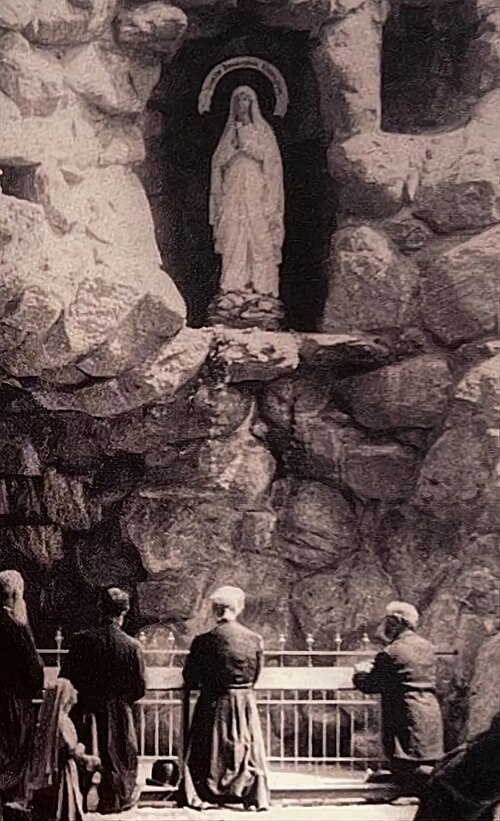
What the Church Does and Does Not Require
The Church does not require any Catholic to believe that Mary appeared at Lourdes. It does not teach that the water heals by itself, and it certifies a cure as miraculous only after ruling out every natural explanation, which is why so few of the thousands of reported cures are recognized. It does not present Lourdes as a new gospel.
A poor, sick, unlettered girl was given a message that has called millions back to prayer, to repentance, and to the sacraments, and that confirmed in the simplest possible voice a truth the Church had just defined: that the mother of God was, from her first instant, full of grace.
The spring still flows. The sick still come. And the message has never once pointed to itself. It points, as Mary always does, to her Son.
Primary and Authoritative Sources
- The official site of the Sanctuary of Our Lady of Lourdes (lourdes-france.org), for the apparitions, the spring, the Medical Bureau, and the recognized cures.
- The episcopal commission and the 1862 decree of Bishop Laurence.
- The Marian Library and International Marian Research Institute, University of Dayton.
- Contemporary testimony, including that of Dr. Dozous on the candle.
- For Bernadette’s later life and incorruption: the Espace Bernadette Soubirous, Nevers (the convent of Saint-Gildard).
- Standard scholarly and devotional accounts, including René Laurentin’s multi-volume documentary history of Lourdes.
This entry is part of The Marian Record, a library of approved and historically documented Marian apparitions and titles maintained by protectmary.com/. All artwork is public domain. All historical claims are drawn from primary episcopal documents and standard scholarly sources. Approval of an apparition means the faithful are free to believe and are given sound reason to; it does not mean belief is required.