Mater Dolorosa
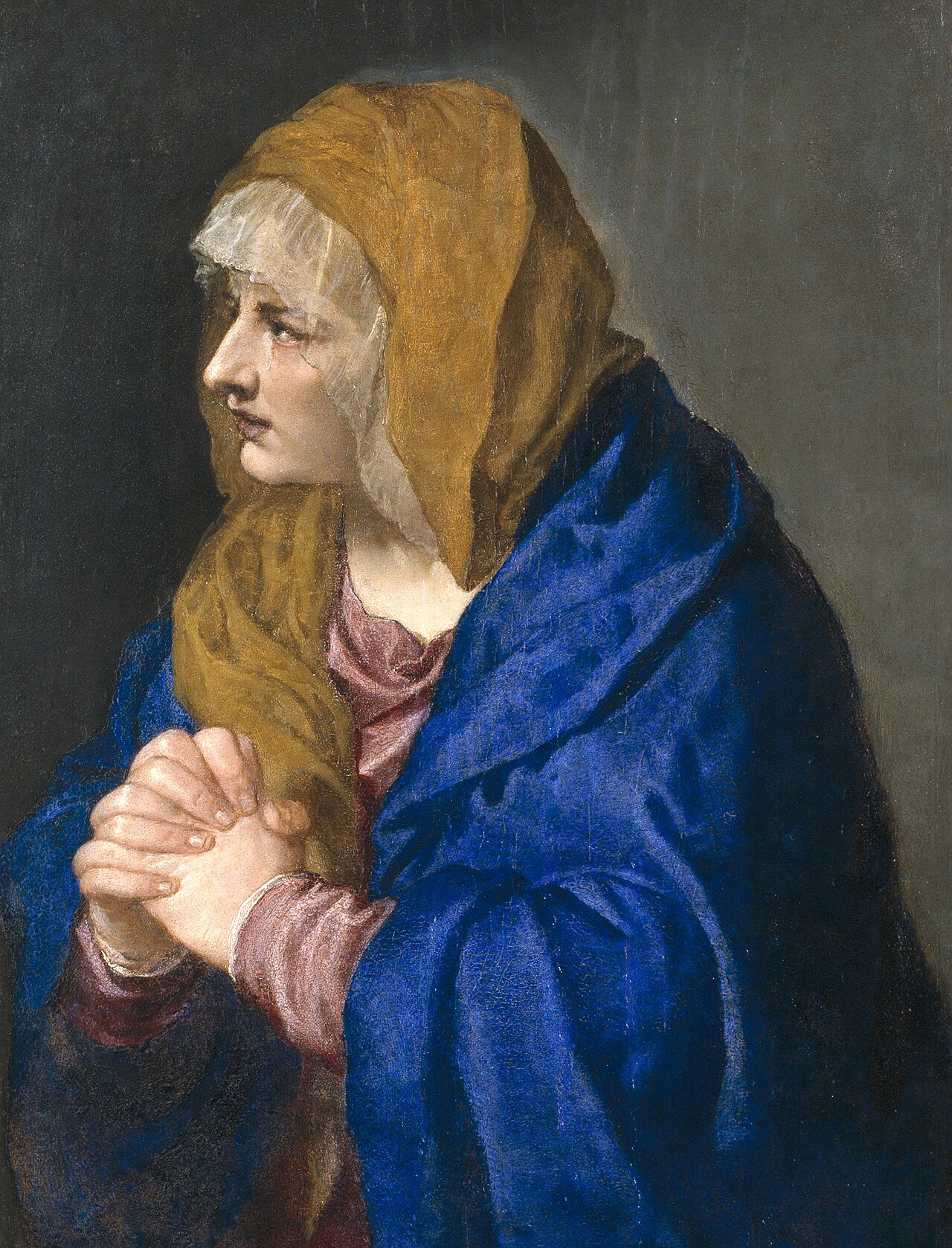
Artist: Titian | Medium: Oil on panel | Year: circa 1555 | Location: Prado Museum, Madrid
Titian made this work in circa 1555, during the period of Mannerism. It is oil on panel, and it lives today in Prado Museum, Madrid. The period was one in which after the perfection of the high renaissance, the artists who followed stretched and distorted that perfection into something stranger and more unsettled, and this work belongs to that tradition.
This is a Mater Dolorosa, the Mother of Sorrows, whose heart was pierced by the swords Simeon prophesied. She stood at the cross and did not look away, which is why the grieving have always run to her.
Just her face and her lifted hands, the seven swords of prophecy in her heart. Her suffering was real and chosen. She stood at the cross and did not look away, which is why the grieving run to her.
What makes this work endure is not only its craft but what it asks of the person who stands before it. The oil on panel is the vehicle; the lesson is the destination. Mary is shown here not as an abstraction but as a person, and the person she is points always past herself toward her Son. That is the consistent grammar of Marian art across eighteen centuries: she is never the end of the gaze. She is the direction of it.
Take a moment with this image. Let it do what it was made to do. It was not made to be admired from a distance. It was made to be prayed before.
Pause before this image. Let it do what it was made to do. It was not made to be admired from a distance. It was made to be prayed before.