The Immaculate Conception, the Soult
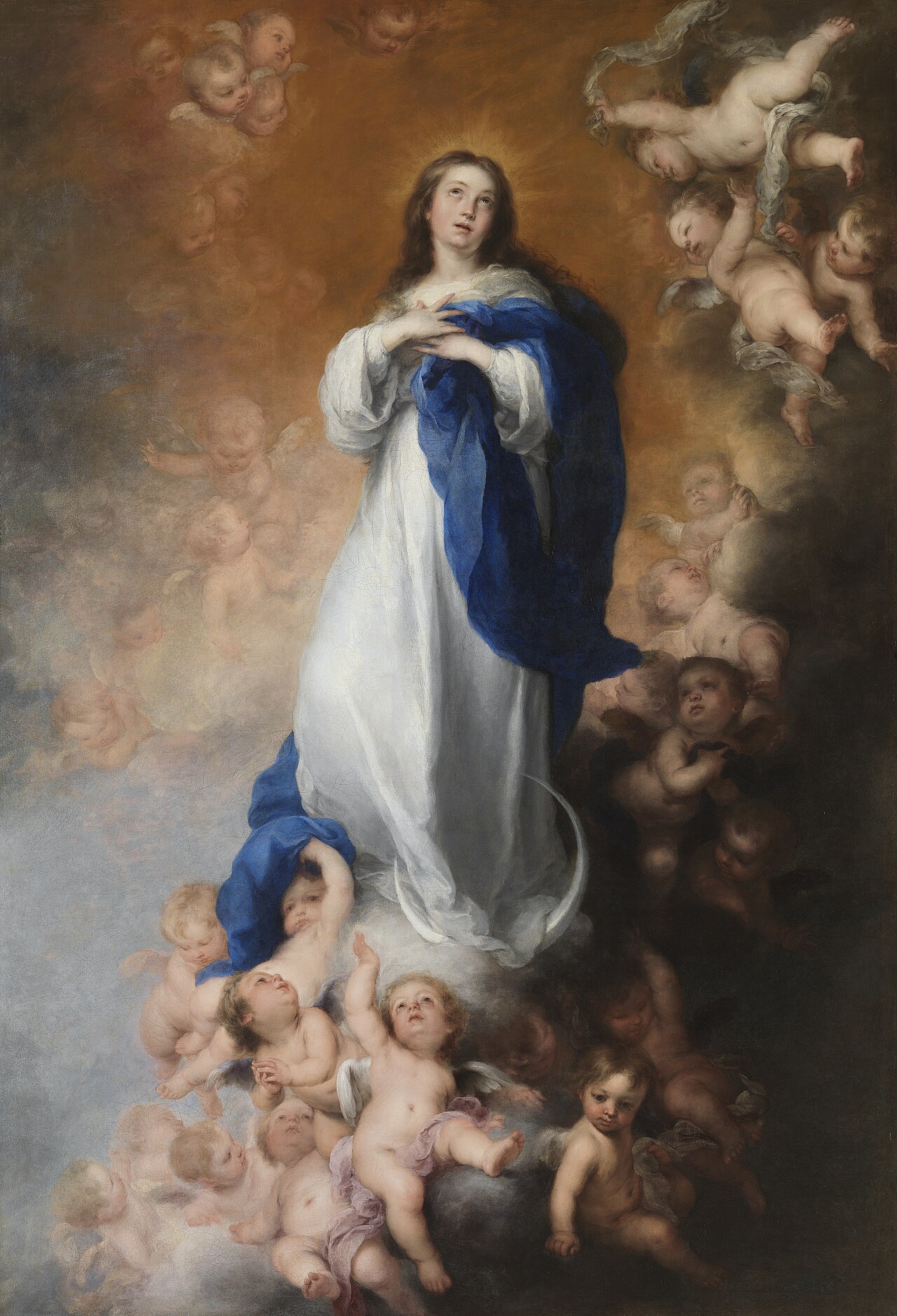
Artist: Bartolome Esteban Murillo | Medium: Oil on canvas | Year: circa 1678 | Location: Prado Museum, Madrid
Bartolome Esteban Murillo made this work in circa 1678, during the period of The Baroque and the Catholic Reformation. It is oil on canvas, and it lives today in Prado Museum, Madrid. The period was one in which the council of trent answered the reformation by insisting on the power of sacred images to move the soul toward god, and this work belongs to that tradition.
The subject is the Immaculate Conception, the doctrine that Mary was preserved from original sin from the first instant of her existence. She stands as the Woman of Revelation, clothed with the sun, the moon beneath her feet.
Murillo’s masterpiece of the subject, Mary rising weightless on a cloud of cherubs, hands folded, eyes raised. The defining image of the doctrine for the Catholic world. Purity as light, a soul caught up entirely toward God.
What makes this work endure is not only its craft but what it asks of the person who stands before it. The oil on canvas is the vehicle; the lesson is the destination. Mary is shown here not as an abstraction but as a person, and the person she is points always past herself toward her Son. That is the consistent grammar of Marian art across eighteen centuries: she is never the end of the gaze. She is the direction of it.
Take a moment with this image. Let it do what it was made to do. It was not made to be admired from a distance. It was made to be prayed before.
Pause before this image. Let it do what it was made to do. It was not made to be admired from a distance. It was made to be prayed before.