Madonna in the Church
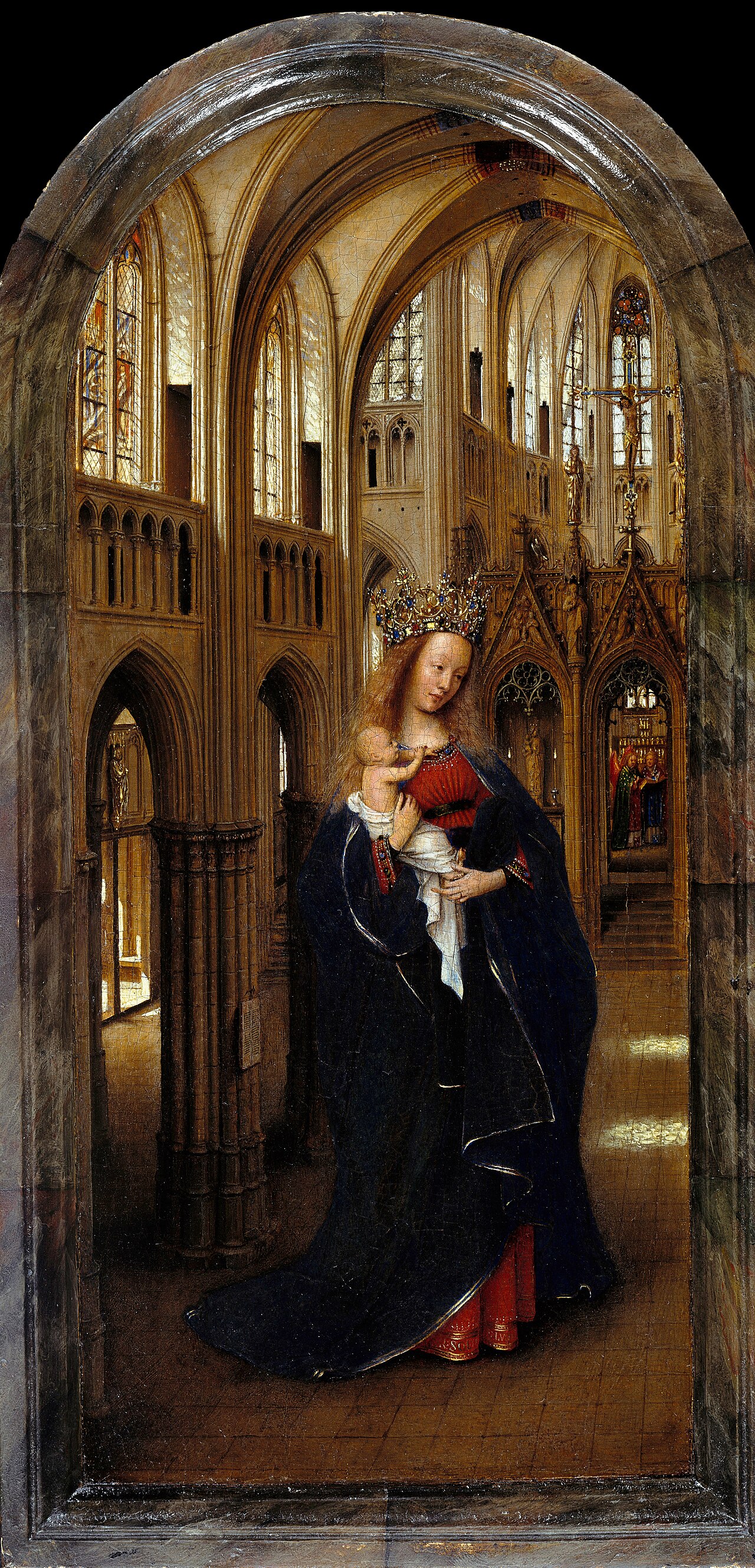
Artist: Jan van Eyck | Medium: Oil on panel | Year: circa 1438 to 1440 | Location: Gemaldegalerie, Berlin
Jan van Eyck made this work in circa 1438 to 1440, during the period of The Early Renaissance in the North. It is oil on panel, and it lives today in Gemaldegalerie, Berlin. The period was one in which the flemish masters brought a different gift to the madonna: the ordinary world made holy, and this work belongs to that tradition.
The subject is the Madonna and Child, the most painted image in the history of Western art. In every age and every style, the Church has returned to this: a mother holding her Son, the human and the divine bound in one embrace.
Mary stands enormous in a cathedral, light streaming through the glass. As sunlight passes through a window without breaking it, the Word entered her without breaking her virginity. An argument in oil for the ever-virgin.
What makes this work endure is not only its craft but what it asks of the person who stands before it. The oil on panel is the vehicle; the lesson is the destination. Mary is shown here not as an abstraction but as a person, and the person she is points always past herself toward her Son. That is the consistent grammar of Marian art across eighteen centuries: she is never the end of the gaze. She is the direction of it.
Take a moment with this image. Let it do what it was made to do. It was not made to be admired from a distance. It was made to be prayed before.
Pause before this image. Let it do what it was made to do. It was not made to be admired from a distance. It was made to be prayed before.