Virgin and Child
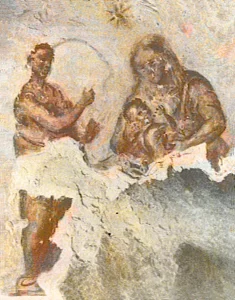
Artist: Unknown | Medium: Fresco | Year: circa 230 to 250 | Location: Catacomb of Priscilla, Rome
This work comes to us without a name attached to it, which is itself a kind of lesson. It was made in the period we call The Earliest Images, a time when the Church was before there were councils or cathedrals, before the faith had a building to call its own, christians painted her on the walls of the underground. The artist who made it is gone, but the image remains, and the image is what was always meant to matter.
This is a Theotokos image, meaning God-bearer. Mary is shown holding or presenting the Christ Child, and the entire meaning of the image flows from that relationship: she matters because of who she carries.
Often called the oldest known image of Mary, painted while the faith was still hunted. From the very beginning Christians drew her holding her Son. Her identity was never separate from His.
What makes this work endure is not only its craft but what it asks of the person who stands before it. The fresco is the vehicle; the lesson is the destination. Mary is shown here not as an abstraction but as a person, and the person she is points always past herself toward her Son. That is the consistent grammar of Marian art across eighteen centuries: she is never the end of the gaze. She is the direction of it.
Take a moment with this image. Let it do what it was made to do. It was not made to be admired from a distance. It was made to be prayed before.
Pause before this image. Let it do what it was made to do. It was not made to be admired from a distance. It was made to be prayed before.