Our Lady of Vladimir
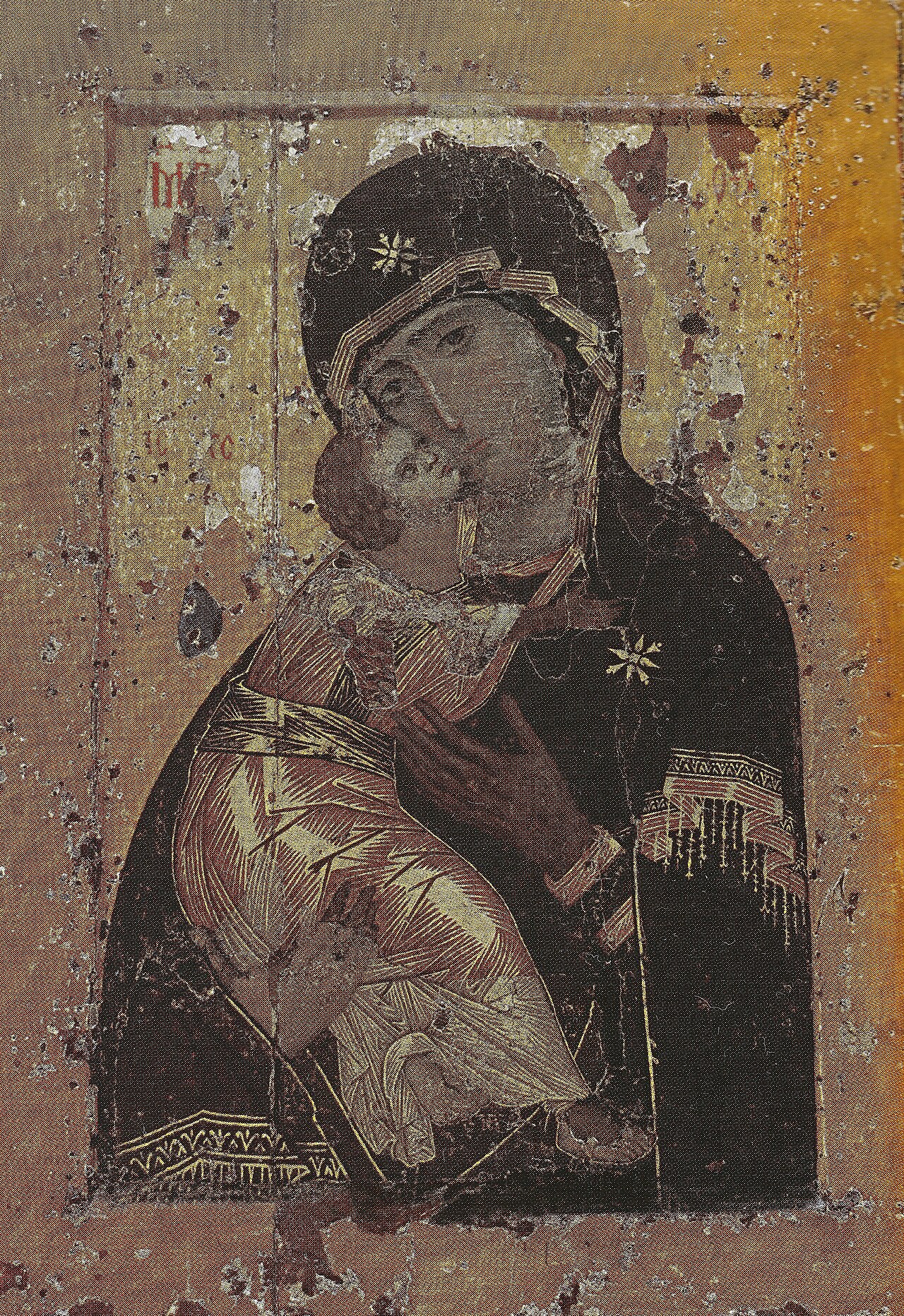
Artist: Byzantine master of Constantinople | Medium: Egg tempera on panel | Year: circa 1130 | Location: Tretyakov Gallery, Moscow
Byzantine master of Constantinople made this work in circa 1130, during the period of The Byzantine Icons and the First Sculptures. It is egg tempera on panel, and it lives today in Tretyakov Gallery, Moscow. The period was one in which the icon is not decoration, and this work belongs to that tradition.
This is an Eleousa, a tenderness icon, where mother and Child press cheek to cheek. The type carries both love and sorrow: the warmth of a mother holding her infant, and the shadow of the cross already present in that embrace.
An Eleousa where the Child presses His cheek to His mother’s and she turns sorrowful eyes toward us. She holds the infant, but she sees the cross. Love and suffering are the same motherhood in her.
What makes this work endure is not only its craft but what it asks of the person who stands before it. The egg tempera on panel is the vehicle; the lesson is the destination. Mary is shown here not as an abstraction but as a person, and the person she is points always past herself toward her Son. That is the consistent grammar of Marian art across eighteen centuries: she is never the end of the gaze. She is the direction of it.
Take a moment with this image. Let it do what it was made to do. It was not made to be admired from a distance. It was made to be prayed before.
Pause before this image. Let it do what it was made to do. It was not made to be admired from a distance. It was made to be prayed before.