Our Lady of Perpetual Help
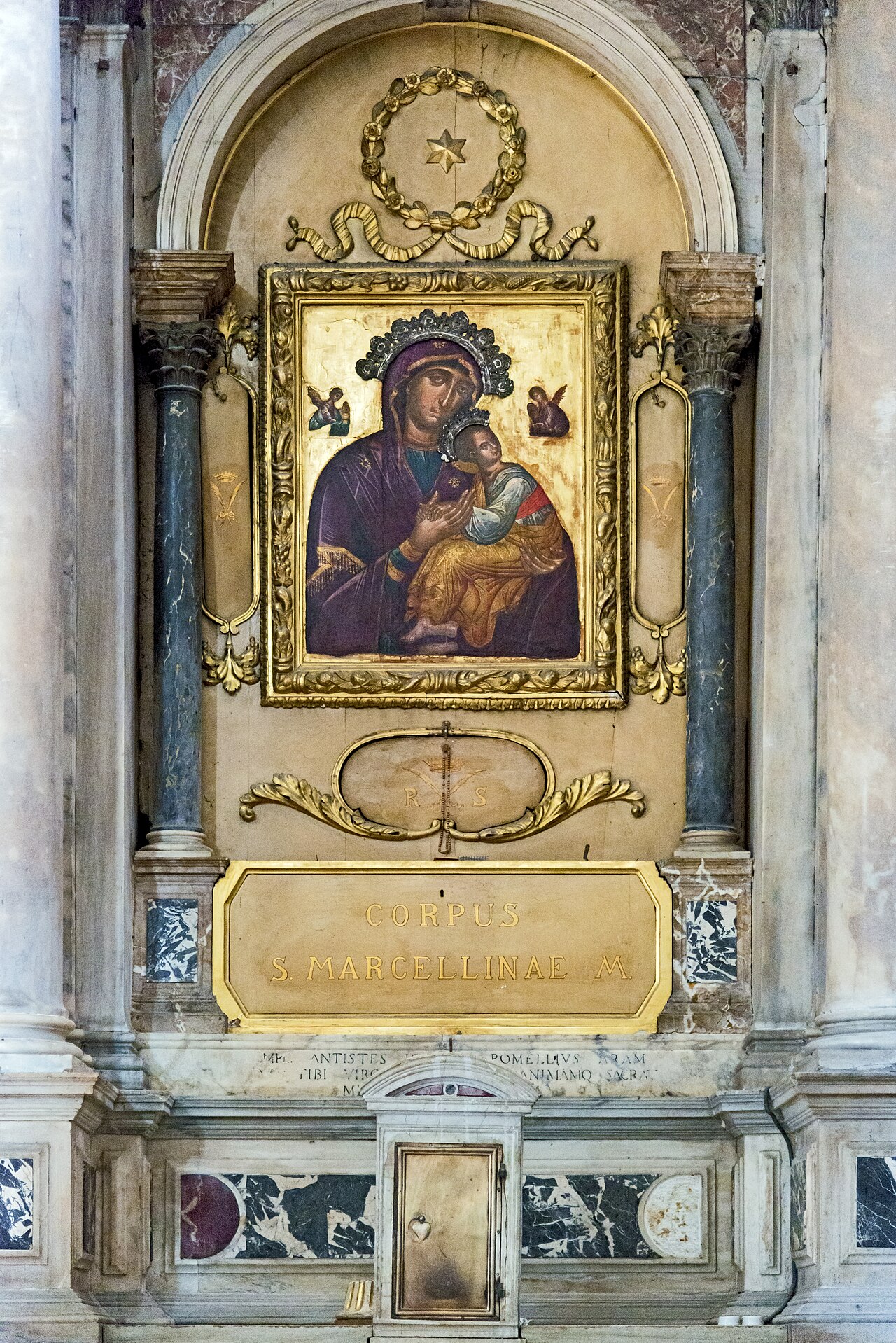
Artist: Unknown Cretan master | Medium: Egg tempera on panel | Year: circa fourteenth to fifteenth century | Location: Church of Sant'Alfonso, Rome
This work comes to us without a name attached to it, which is itself a kind of lesson. It was made in the period we call The Byzantine Icons and the First Sculptures, a time when the Church was the icon is not decoration. The artist who made it is gone, but the image remains, and the image is what was always meant to matter.
This belongs to the Hodegetria type, meaning she who shows the Way. Mary gestures toward the Child, directing every eye away from herself and toward her Son. She is never the destination. She is the road.
Angels hold the instruments of the Passion, the Child runs to His mother in fear, a sandal dangling from His foot, and she looks not at Him but at us. Even cradling her frightened Son, her gaze is turned toward the one who prays.
What makes this work endure is not only its craft but what it asks of the person who stands before it. The egg tempera on panel is the vehicle; the lesson is the destination. Mary is shown here not as an abstraction but as a person, and the person she is points always past herself toward her Son. That is the consistent grammar of Marian art across eighteen centuries: she is never the end of the gaze. She is the direction of it.
Take a moment with this image. Let it do what it was made to do. It was not made to be admired from a distance. It was made to be prayed before.
Pause before this image. Let it do what it was made to do. It was not made to be admired from a distance. It was made to be prayed before.