Adoration of the Magi
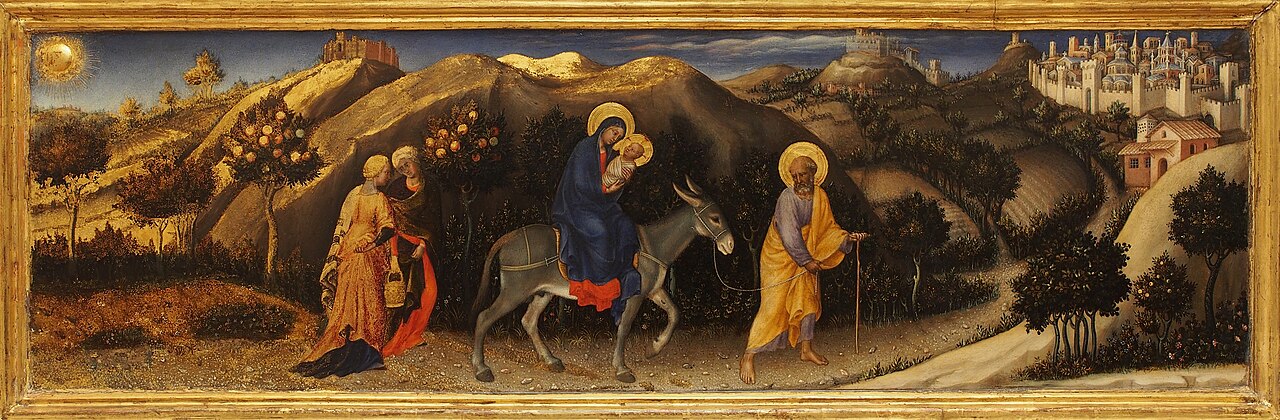
Artist: Gentile da Fabriano | Medium: Tempera on panel | Year: 1423 | Location: Uffizi Gallery, Florence
Gentile da Fabriano made this work in 1423, during the period of The Early Renaissance in Italy. It is tempera on panel, and it lives today in Uffizi Gallery, Florence. The period was one in which the italian renaissance began, in large part, as a revolution in how to paint the madonna, and this work belongs to that tradition.
The subject is the Nativity, the birth of Christ, and Mary is at its center. She is the one who said yes, who carried Him, who brought Him into the world, and who is the first to adore Him.
A golden, jeweled procession of kings arrives, and at the still center Mary calmly presents the Child to be adored. The lesson is that the powerful and the wealthy must finally come and kneel before a baby on His mother’s lap.
What makes this work endure is not only its craft but what it asks of the person who stands before it. The tempera on panel is the vehicle; the lesson is the destination. Mary is shown here not as an abstraction but as a person, and the person she is points always past herself toward her Son. That is the consistent grammar of Marian art across eighteen centuries: she is never the end of the gaze. She is the direction of it.
Take a moment with this image. Let it do what it was made to do. It was not made to be admired from a distance. It was made to be prayed before.
Pause before this image. Let it do what it was made to do. It was not made to be admired from a distance. It was made to be prayed before.