The Saint Mary's Altarpiece
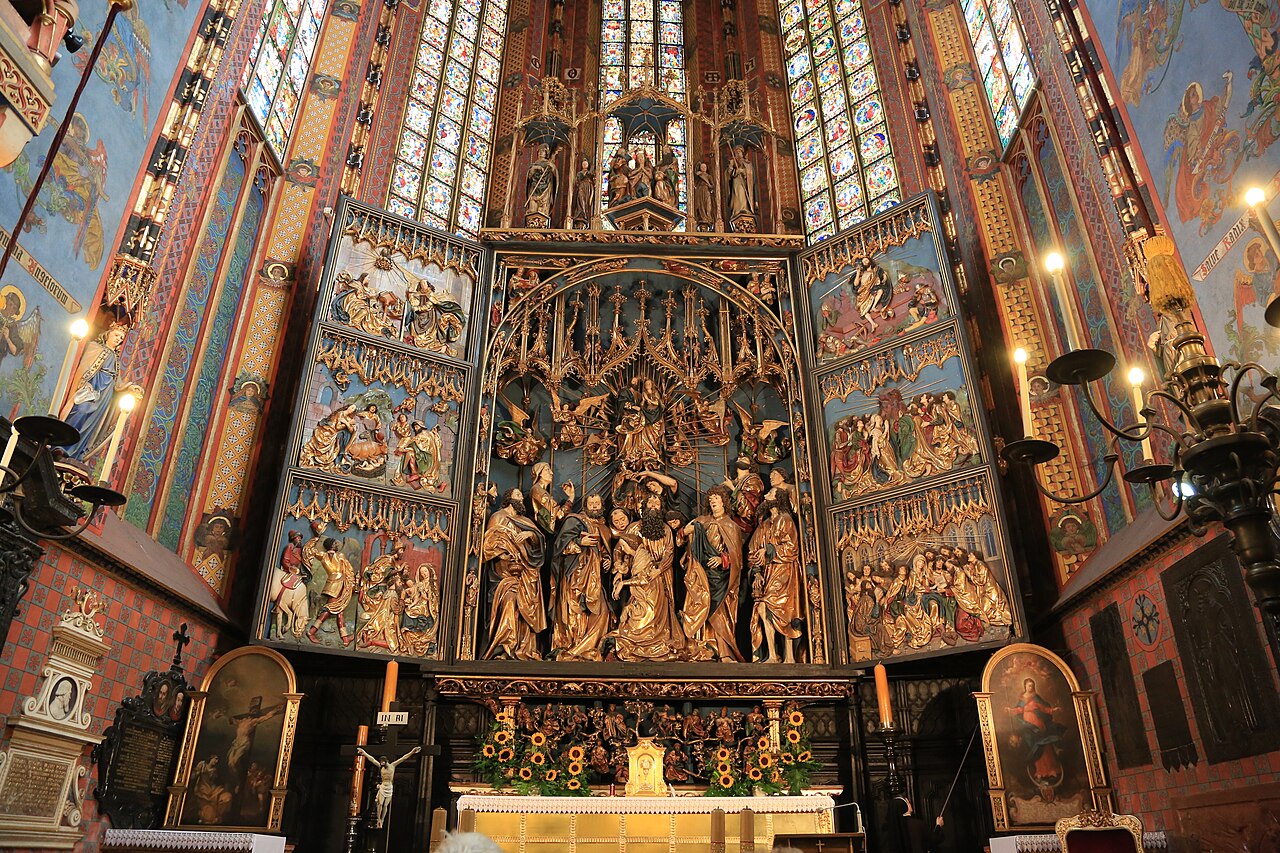
Artist: Veit Stoss | Medium: Polychrome and gilded limewood | Year: 1477 to 1489 | Location: Saint Mary's Basilica, Krakow
Veit Stoss made this work in 1477 to 1489, during the period of The Early Renaissance in the North. It is polychrome and gilded limewood, and it lives today in Saint Mary’s Basilica, Krakow. The period was one in which the flemish masters brought a different gift to the madonna: the ordinary world made holy, and this work belongs to that tradition.
The subject is the Assumption, the taking of Mary body and soul into Heaven. She was the first of the redeemed to receive what is promised to all who are saved, the first fruit of her Son’s resurrection.
A colossal carved altarpiece whose central scene shows Mary falling asleep in death among the apostles as she is taken up to Heaven. The largest Gothic altarpiece in the world teaches the Dormition and Assumption in wood the height of a building.
What makes this work endure is not only its craft but what it asks of the person who stands before it. The polychrome and gilded limewood is the vehicle; the lesson is the destination. Mary is shown here not as an abstraction but as a person, and the person she is points always past herself toward her Son. That is the consistent grammar of Marian art across eighteen centuries: she is never the end of the gaze. She is the direction of it.
Take a moment with this image. Let it do what it was made to do. It was not made to be admired from a distance. It was made to be prayed before.
Pause before this image. Let it do what it was made to do. It was not made to be admired from a distance. It was made to be prayed before.