Santa Trinita Maesta
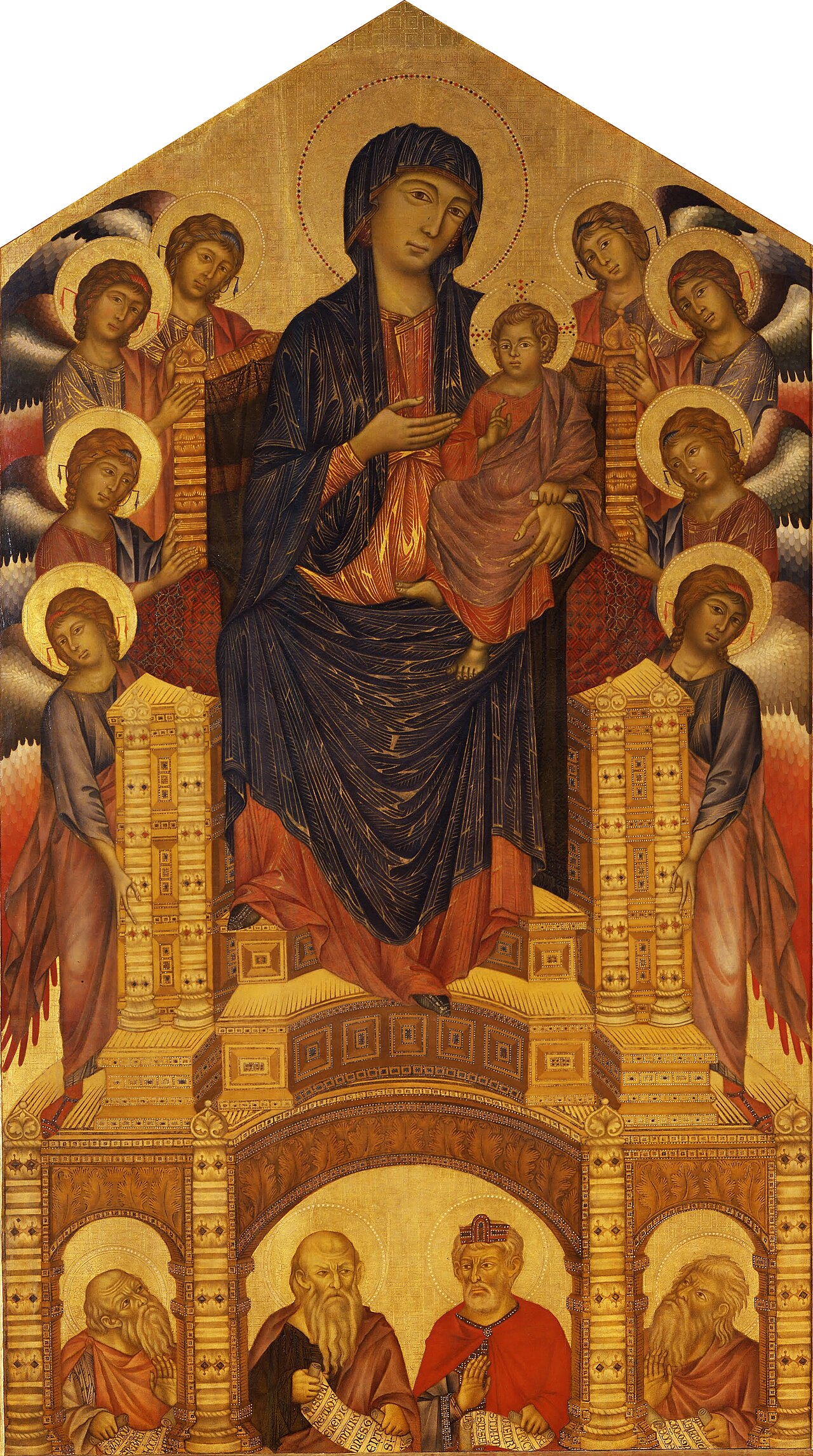
Artist: Cimabue | Medium: Tempera and gold on panel | Year: circa 1280 to 1290 | Location: Uffizi Gallery, Florence
Cimabue made this work in circa 1280 to 1290, during the period of The Gothic Age. It is tempera and gold on panel, and it lives today in Uffizi Gallery, Florence. The period was one in which the gothic cathedral was built to be a sermon in stone and glass, and mary was its subject, and this work belongs to that tradition.
The type is the Sedes Sapientiae, the Throne of Wisdom. Mary is seated, and her lap is the throne on which Wisdom Himself sits. She is not incidental to the scene. She is its architecture, the seat from which God reigns.
Mary enthroned in majesty, vast and golden, angels stacked beside her. Still Byzantine, but Cimabue lets softness into her face. The hinge moment when the icon begins to become a person.
What makes this work endure is not only its craft but what it asks of the person who stands before it. The tempera and gold on panel is the vehicle; the lesson is the destination. Mary is shown here not as an abstraction but as a person, and the person she is points always past herself toward her Son. That is the consistent grammar of Marian art across eighteen centuries: she is never the end of the gaze. She is the direction of it.
Take a moment with this image. Let it do what it was made to do. It was not made to be admired from a distance. It was made to be prayed before.
Pause before this image. Let it do what it was made to do. It was not made to be admired from a distance. It was made to be prayed before.