Our Lady of Guadalupe, the Tilma
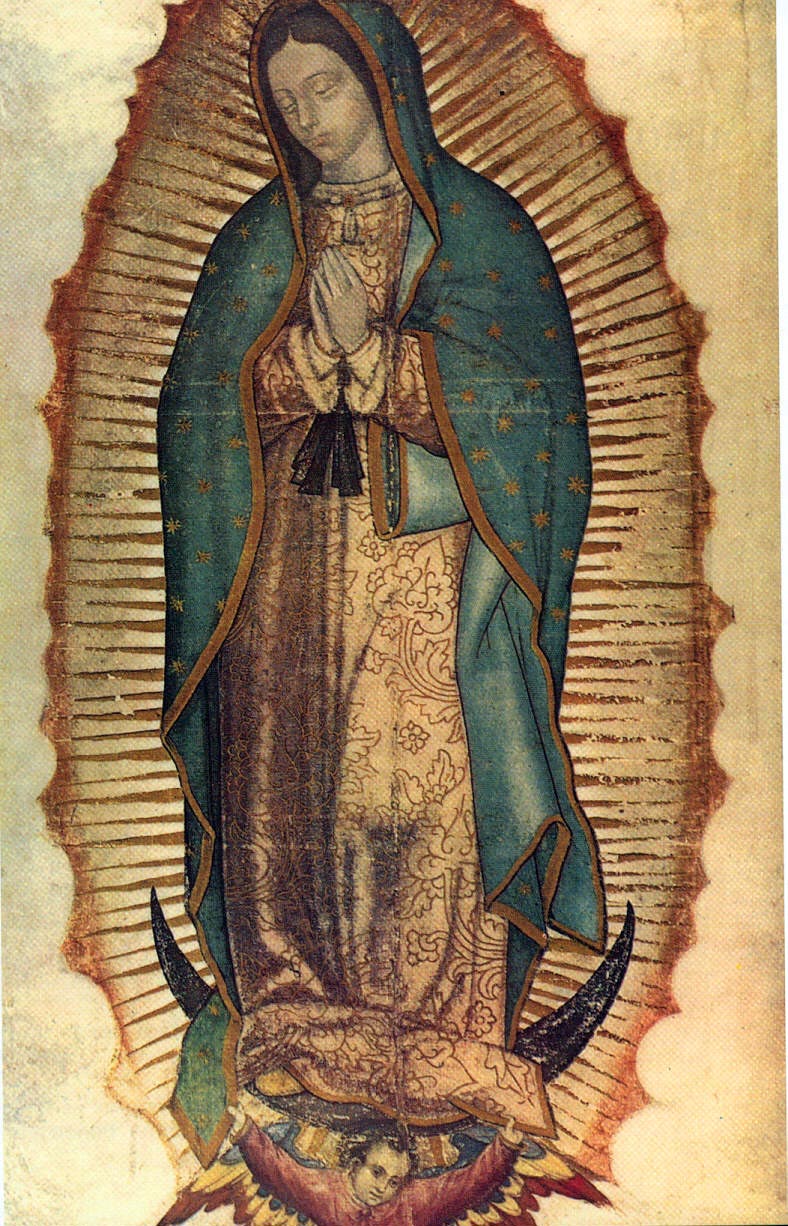
Artist: Held to be not made by human hands | Medium: Pigment on an agave-fiber cloak | Year: 1531 | Location: Basilica of Our Lady of Guadalupe, Mexico City
This work comes to us without a name attached to it, which is itself a kind of lesson. It was made in the period we call The Miraculous Images of Pilgrimage, a time when the Church was some images are not only art. The artist who made it is gone, but the image remains, and the image is what was always meant to matter.
The subject is the Immaculate Conception, the doctrine that Mary was preserved from original sin from the first instant of her existence. She stands as the Woman of Revelation, clothed with the sun, the moon beneath her feet.
The image left on a peasant’s cloak after Mary appeared to Saint Juan Diego, a pregnant native woman clothed with the sun. Within a decade, millions came to the faith. Am I not here, she said, I who am your mother.
What makes this work endure is not only its craft but what it asks of the person who stands before it. The pigment on an agave-fiber cloak is the vehicle; the lesson is the destination. Mary is shown here not as an abstraction but as a person, and the person she is points always past herself toward her Son. That is the consistent grammar of Marian art across eighteen centuries: she is never the end of the gaze. She is the direction of it.
Take a moment with this image. Let it do what it was made to do. It was not made to be admired from a distance. It was made to be prayed before.
Pause before this image. Let it do what it was made to do. It was not made to be admired from a distance. It was made to be prayed before.