The Lamentation
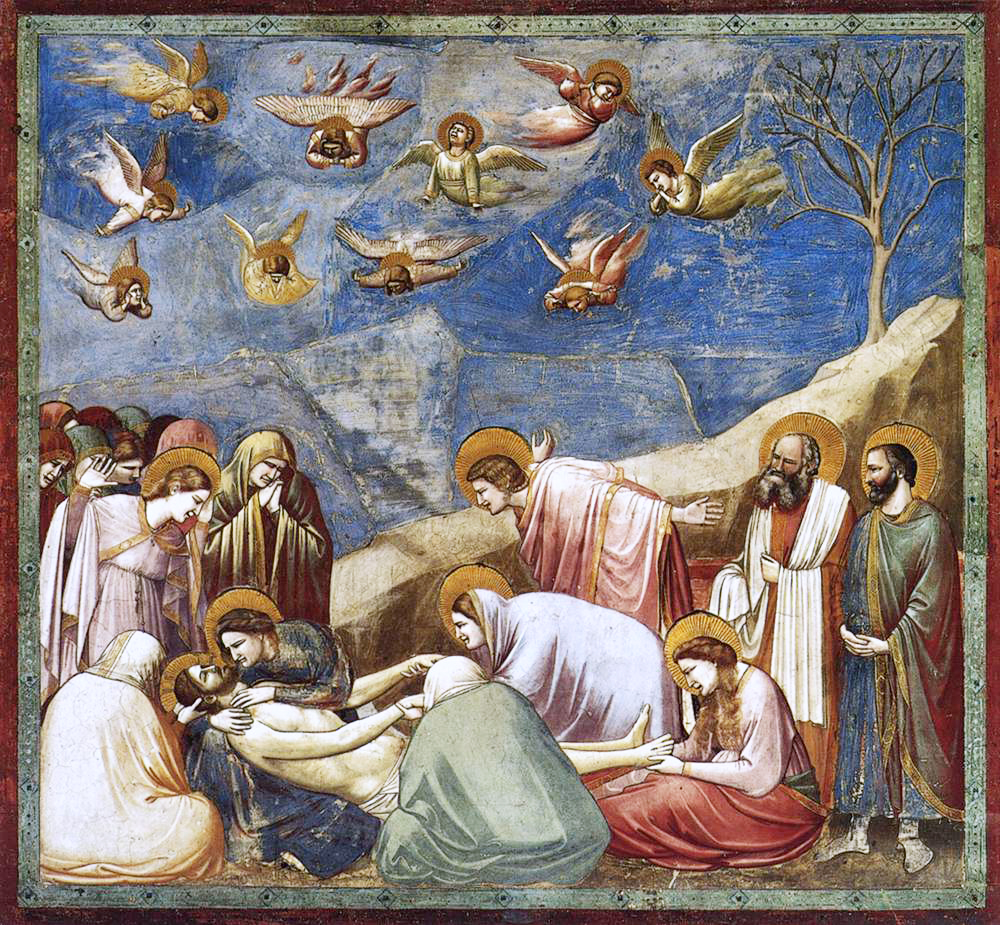
Artist: Giotto | Medium: Fresco | Year: circa 1305 | Location: Scrovegni Chapel, Padua
Giotto made this work in circa 1305, during the period of The Gothic Age. It is fresco, and it lives today in Scrovegni Chapel, Padua. The period was one in which the gothic cathedral was built to be a sermon in stone and glass, and mary was its subject, and this work belongs to that tradition.
The subject is the Pieta, the sorrowful mother receiving the body of her dead Son. She held Him into the world, and she holds Him out of it. The same arms that cradled the infant now cradle the crucified.
Mary bends over the dead body of her grown Son and presses her face to His while angels tear across the sky. Giotto gave holy figures real human grief for the first time, and gave it first to a mother holding her dead child.
What makes this work endure is not only its craft but what it asks of the person who stands before it. The fresco is the vehicle; the lesson is the destination. Mary is shown here not as an abstraction but as a person, and the person she is points always past herself toward her Son. That is the consistent grammar of Marian art across eighteen centuries: she is never the end of the gaze. She is the direction of it.
Take a moment with this image. Let it do what it was made to do. It was not made to be admired from a distance. It was made to be prayed before.
Pause before this image. Let it do what it was made to do. It was not made to be admired from a distance. It was made to be prayed before.